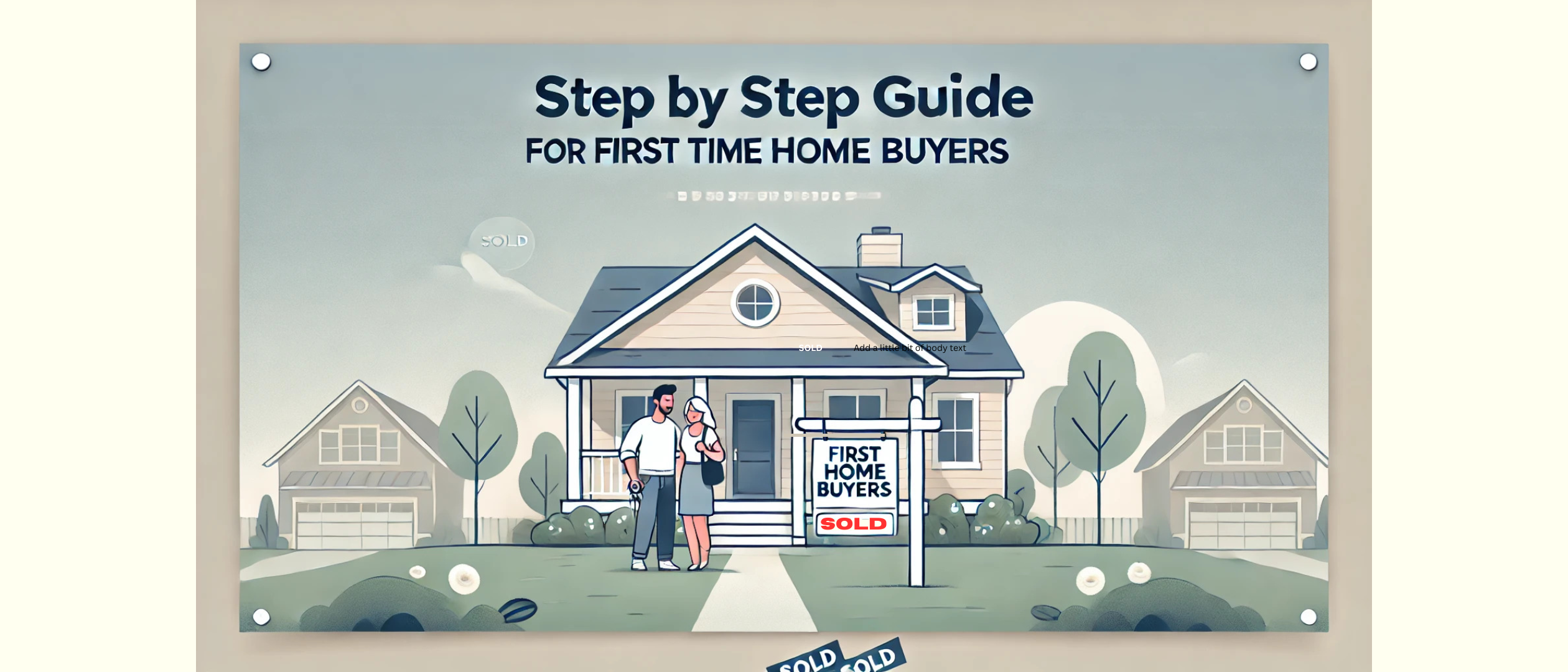
Buying your first home is an exciting journey, but it can be overwhelming if you're not sure where to start.
This step-by-step guide will walk you through the home-buying process, helping you make informed decisions along the
way.
1. Determine Your Budget
The first step in the home-buying process is figuring out how much you can afford. You'll need to evaluate your
current financial situation, including your income, savings, and existing debts.
Get Pre-Approved for a Mortgage
Before you even start looking at homes, obtaining a mortgage pre-approval is crucial. It not only
helps you
understand your price range but also shows sellers you're serious, giving you a competitive edge. Pre-approval
involves a lender reviewing your financial information and offering you a conditional loan amount. This will allow
you to:
- Set a clear budget: Know exactly what you can afford.
- Strengthen your offer: Sellers prefer buyers with pre-approvals as it speeds up the process.
- Prevent surprises: By understanding what loan you qualify for, you avoid disappointment later.
2. Save for a Down Payment
Most home purchases require a down payment, typically ranging from 5% to 20% of the home's price. Here are some
strategies to get there:
- Start saving early: Set aside a portion of your income specifically for the down payment.
- Explore first-time homebuyer programs: These programs can offer lower down payment requirements
or even grants and tax credits to help reduce your financial burden.
3. Be Aware of Additional Costs
When buying their first home, buyers can incur several costs beyond just the purchase price. Here are some of the key
expenses first-time homebuyers should be prepared for:
Upfront Costs
- Down Payment:
This is typically 5% to 20% of the home's purchase price.
- Home Inspection Fee:
Ranges from $300* to $1,000*. While optional, it's highly recommended to identify
potential issues.
- Appraisal Fee:
Usually costs between $275* and $500*.
- Land Survey:
May cost $1,000* to $2,000*, though not always required.
Closing Costs
- Legal Fees: Typically range from $1500* to $2,000*.
- Land Transfer Tax: Varies by province and purchase price. First-time buyers may be eligible for
rebates.
- Title Insurance: Costs around $250* to $400*.
- Property Transfer Tax (PTT): Calculated based on the purchase price.
- HST: This is not applicable on resale homes. HST is applicable on a new home construction home
purchased from a
builder. Many builders include the HST in their price. There are potential rebates available.
Mortgage-Related Costs
- Mortgage Default Insurance: Required for down payments less than 20%, usually added to the
mortgage amount. You may
still be required to purchase insurance even if your down payments is 20%. This may be the case if you're
self-employed or have a poor credit history.
- Mortgage Life Insurance: Optional coverage to pay off the mortgage if the owner dies.
Other Costs
- Property Insurance: Required by most lenders, costs vary.
- Property Taxes: You may need to reimburse the seller for prepaid taxes.
- Utility Connection Fees: Fees for connecting services like electricity, gas, water, and
internet.
- Moving Expenses: Can vary widely depending on distance and services required.
Post-Purchase Costs
- Immediate Repairs and Maintenance: May be necessary depending on the home's condition.
- New Furniture and Appliances: Often overlooked but can be a significant cost.
It's important for first-time buyers to budget for these additional costs, which can typically range from 1.5% to 4%
of the home's purchase price. Being prepared for these expenses can help avoid financial stress and ensure a
smoother home-buying process
4. Research the Market
Once you have a budget and pre-approval in place, you'll need to get familiar with the local housing market.
This
means researching neighborhoods, average home prices, and any factors that could impact your decision.
- Compare different areas: Consider commute times, proximity to schools, and access to amenities
like parks and shops.
- Monitor price trends: Knowing how prices fluctuate can help you time your purchase.

5. Find the Right Real Estate Team or Agent
Having the right representation is crucial when buying your first home. While many buyers consider working with a
solo agent, there are significant benefits to using a real estate team instead. Here's why:
Benefits of Using a Team
- Specialized Expertise: A team often includes members who specialize in different aspects of the
buying
process—whether it's negotiations, paperwork, or local market insights-ensuring you get the best possible advice
at
every stage.
- Greater Availability: With multiple team members, someone is always available to assist you,
even if one agent is
tied up with another client or personal obligations.
- Enhanced Resources: Teams often have access to more comprehensive marketing tools, listings,
and networks, giving
you an edge in finding the perfect home.
- Support Throughout the Process: A team can guide you through every step, from viewing homes to
closing, with
seamless coordination to make sure nothing falls through the cracks
By working with a team, you gain access to a wealth of collective knowledge and resources, improving your overall
home-buying experience.
Make sure that the team or agent that you hire to represent you...
- Specializes in first-time homebuyers: They'll take the time to explain each step and have
a clear understanding of
your needs.
- Knows the local market: A team or agent familiar with your target area can help you find the
best deals and
negotiate effectively.
- Strong Negotiator: Check that the team or agent that you choose is an experienced professional
and has a history of
powerful negotiation.
SCHEDULE A ZOOM CONSULTATION
6. Start House Hunting
Now that you know what you can afford and have a pre-approval in hand, it's time to start looking for your dream
home. Keep these tips in mind:
- Make a wish list: List your must-haves and nice-to-haves to help stay focused during your
search.
- View multiple homes: Don't settle on the first house you see. Compare several properties
to get a sense of what's available.
- Be ready to act fast: In competitive markets, homes can sell quickly, so be prepared to make an
offer when the right one comes along.
7. Make an Offer
When you've found the perfect home, it's time to make an offer. Here's how:
- Work with your agent: They'll help you determine the right offer based on comparable
properties in the area and your
budget.
- Negotiate as needed: Be prepared to negotiate the price or request certain contingencies.
- Provide earnest money: This deposit shows the seller you're serious about purchasing the
home.
8. Conduct a Home Inspection
Before finalizing the deal, get the property inspected to uncover any potential issues. A professional home
inspection can help you avoid costly surprises down the road.
9. Secure Financing
With the inspection complete, it's time to lock in your mortgage. Here's what you'll need to do:
- Lock in your interest rate: Mortgage rates fluctuate, so securing a rate early can save you
money.
- Submit your documentation: Provide your lender with all necessary paperwork to complete the
loan approval process.
- Prepare for closing costs: Be aware of additional fees such as taxes, title insurance, and
legal fees that will be due at closing.
10. Close the Deal
Once your mortgage is approved, it's time to close the deal! Review the closing documents with your real estate agent
and attorney to ensure everything is in order. After signing, the keys to your new home are yours!

11. Move In and Celebrate!
Congratulations! You've made it through the home-buying process. Now it's time to move into your new home and enjoy the benefits of homeownership.
SCHEDULE A ZOOM CONSULTATION